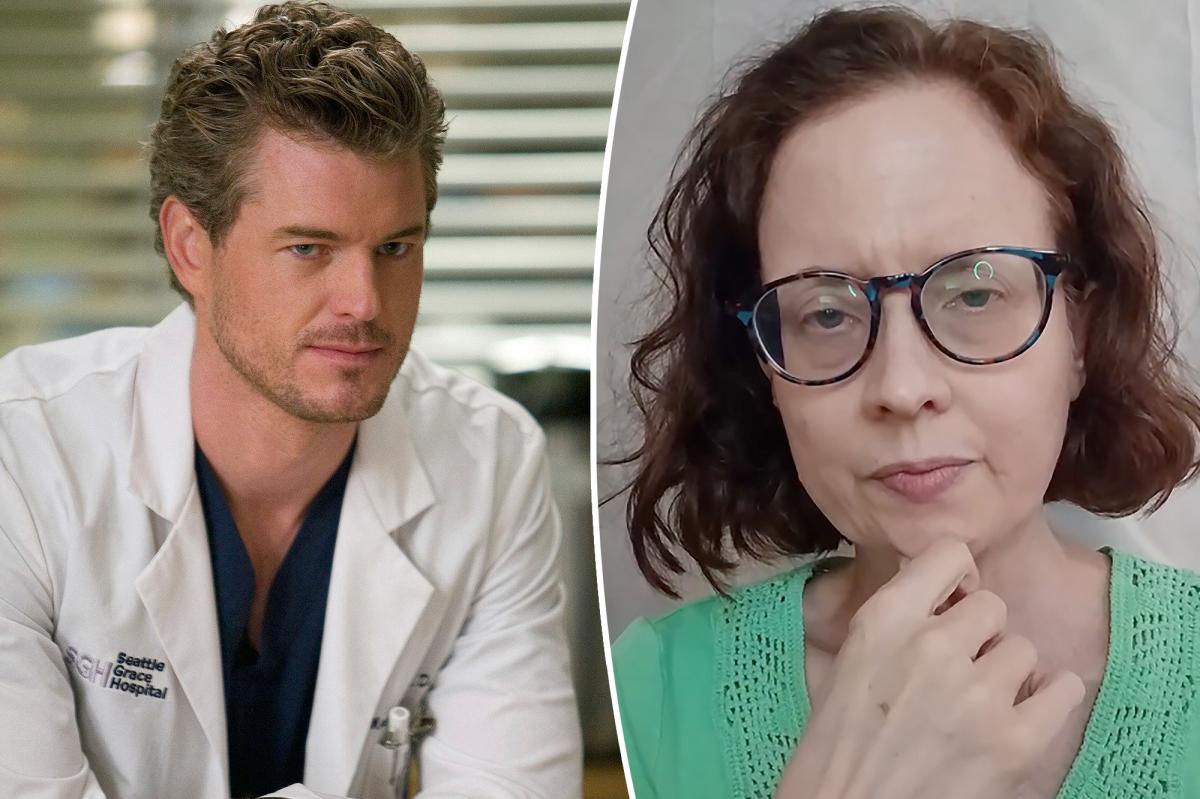
Controversial Claims Emerge: Grey's Anatomy Extra Labels Eric Dane a 'Bully' Posthumously
The entertainment world was met with sorrow following the passing of beloved actor Eric Dane at the age of 53, due to Amyotrophic Lateral Sclerosis (ALS). Known affectionately by millions as Dr. Mark Sloan, or "McSteamy," on the hit medical drama Grey's Anatomy, Dane left behind a significant legacy and a grieving fanbase. However, in the wake of his death, a former background actor from the series, Laura Ann Tull, ignited a firestorm of controversy by leveling serious allegations, publicly branding Eric Dane a bully and "evil" in a series of social media posts. These posthumous claims have sparked widespread debate, raising questions about workplace conduct, the ethics of post-mortem accusations, and the enduring power of fan loyalty.
The Allegations: An Extra's Posthumous Accusations
In a series of posts on Instagram's Threads platform, Laura Ann Tull, who identifies herself as a former Grey's Anatomy extra, did not mince words about Eric Dane. She described the late actor as not merely a "bully" but also an "evil," "cowardly," "jerk," and "narcissistic" individual who allegedly "abused" her and was responsible for her termination from the show in 2008. Tull's claims went further, asserting that she was the reason Dane was "fired from Grey's" in 2012, though she expressed doubt that show creator Shonda Rhimes would "ever admit" it.
Her posts were emotionally charged, stating, "His dying doesn't change the destruction he caused me. I only wish he apologized and admitted what he did." These sentiments echoed a 2018 essay Tull had written on Medium, where she detailed her Hollywood experiences. In that earlier piece, she claimed to have never directly spoken to Dane during her three years as an extra on Grey's Anatomy, but believed she overheard him speaking negatively about her.
The timing of these grave accusations, coming after Dane's death and battle with ALS, immediately drew intense scrutiny and condemnation from many corners of the internet. The gravity of labeling Eric Dane a bully and an abuser after he could no longer defend himself became a central point of contention for fans and observers alike.
Contradictory Narratives: Dane's Departure from Grey's Anatomy
A significant point of divergence in the narrative surrounds Eric Dane's departure from Grey's Anatomy in 2012. Laura Ann Tull claimed a direct role in his exit, suggesting her complaints or presence led to him being "fired." However, official accounts and Dane's own statements paint a very different picture.
During an appearance on Dax Shepard's podcast, Dane clarified that his departure was primarily due to financial considerations. "I was starting to become...as most of these actors who have spent significant time on the show, you start to become very expensive for the network," he explained. This aligns with reports from industry publications like The Hollywood Reporter, which attributed his 2012 exit to budget and creative decisions, common reasons for long-running cast members to leave popular series as their salaries grow.
While Dane had also openly discussed personal struggles with prescription medication around that time, he maintained these were not the primary drivers for his exit from the show. The lack of any public record supporting Tull's claim that she influenced his departure, juxtaposed with consistent explanations from Dane and industry sources, casts considerable doubt on her assertions. For a deeper dive into the conflicting accounts surrounding his departure, read Eric Dane's Grey's Anatomy Exit: Bully Claims vs. Budget Reality.
The Public's Outcry: Social Media Slams Posthumous Claims
The reaction to Laura Ann Tull's claims was swift and overwhelmingly negative across social media platforms. Fans and the general public alike expressed outrage at the timing and nature of her accusations, particularly given Dane's recent death and his public battle with ALS.
- One user decried her remarks as "indecency towards his family," wishing his daughters "never see the vitriol you are spewing out now."
- Another commenter questioned the motive, asking, "What is the point of this? Attacking someone after they die of a horrific disease and they cannot defend themselves just smacks of indecency towards his family."
- Skeptics also challenged Tull's credibility, with one remarking, "Now I see why you were fired. You seem like a walking HR case."
- Many fans, who claimed to have watched Grey's Anatomy countless times, questioned if Tull was even genuinely an extra on the show, noting her absence from online records or fan memories. "I have watched Grey's Anatomy from start to finish so many times. … I’ve never seen you in my life. Ever," one fan commented.
- Perhaps the most pointed criticism came from users who turned the accusation back on Tull herself: "Seems like you are the one who is a bully."
Tull attempted to defend her statements by referencing her 2018 Medium essay, which mentioned her experiences on set. However, the public backlash largely focused on the perceived inappropriateness of her timing and the lack of verifiable evidence for her serious accusations. The intensity of the public's response highlights a societal discomfort with posthumous character assassination, especially when the deceased has no opportunity for rebuttal. This significant social media reaction is explored further in Eric Dane Bully Claims: Social Media Slams Actress's Remarks.
Navigating Complexities: Unverified Claims and Lasting Legacies
The allegations that Eric Dane was a bully underscore the complex and often murky nature of claims made years after an event, particularly when one party is deceased. Without direct evidence or corroborating accounts, it becomes incredibly challenging to ascertain the truth of such assertions. For background actors, the experience on set can be very different from that of principal cast members. Perceptions of being ignored, dismissed, or even subtly mocked might arise in a bustling production environment, and these subjective experiences, while valid for the individual, can be difficult to objectively verify as intentional "abuse" or "bullying" years later.
Eric Dane, through his portrayal of Dr. Mark Sloan, left an indelible mark on television, becoming a fan favorite for his charm, wit, and emotional depth. In the months leading up to his passing, he bravely used his platform to advocate for ALS awareness, speaking openly about his condition and inspiring many. This dedication to advocacy in the face of a devastating illness further complicated the public's reception of Tull's claims.
Ultimately, this unfortunate controversy serves as a stark reminder of several ethical considerations:
- The burden of proof: Serious allegations, especially those leveled posthumously, typically require substantial evidence to be credible. In this case, the lack of such evidence from Tull's side leaves her claims largely unsubstantiated.
- The right to defense: Accusations made against someone who cannot respond or defend themselves are inherently problematic, robbing the deceased of their voice and potentially tarnishing their memory without due process.
- Impact on legacy and family: Posthumous attacks can cause profound pain to surviving family members and permanently alter the public perception of an individual's life and career.
While everyone has a right to share their experiences, the timing and context of such disclosures are crucial. The incident highlights the precarious balance between an individual's right to speak their truth and the ethical implications of impacting a deceased person's legacy.
Conclusion
The claims made by former Grey's Anatomy extra Laura Ann Tull, labeling Eric Dane a bully and an abuser posthumously, have undeniably cast a shadow over the memory of a beloved actor. While Tull maintains her experiences were genuine and impactful, the absence of corroborating evidence, coupled with Dane's own clear explanations for his departure from the show, and the overwhelming public backlash, complicates her narrative significantly. This episode serves as a powerful illustration of the difficulties in navigating personal accusations made after a public figure's death, prompting reflection on the ethical responsibilities of those who speak out, and the public's role in discerning truth from unsubstantiated claims in the age of social media. As Eric Dane's fans continue to mourn his loss, his legacy as "McSteamy" and an ALS advocate remains firmly etched in the hearts of many.